

A Message from the Lab Co-Director

When I was a student in an ethnography course, I was given an assignment that seemed almost absurdly simple: go somewhere and watch. I chose a highway construction project near where I was living, and I spent two hours watching a crew work.
We all pass road crews constantly, seeing them for a few seconds through a windshield, and the stereotype writes itself—a lot of people standing around. Stopping to watch for a few hours inverted that picture. Each worker owned a different piece of the job, and the ones standing were waiting for someone ahead of them to finish. They weren’t idle; they were dependent. The work moved only because all of them were there, in sequence. I couldn’t have learned that from a drive-by, and I couldn’t have learned it from a report on the project’s budget. I had to sit there and observe for an extended period.
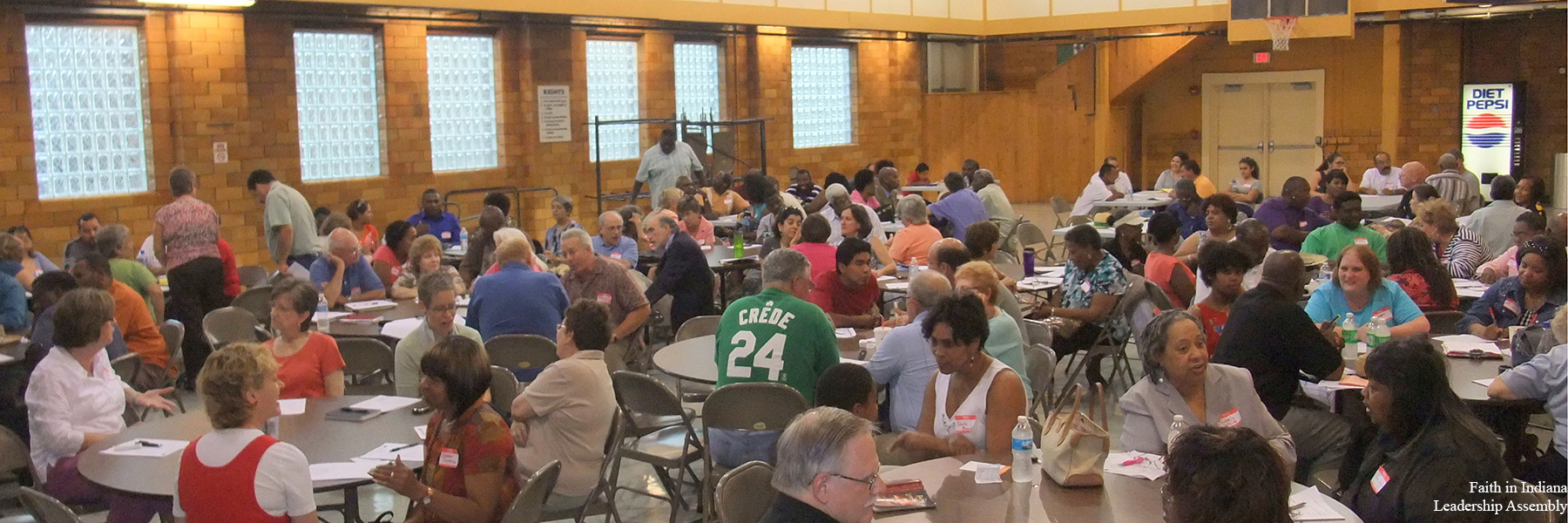
That experience has stayed with me for years, and it is partly why the Observing Civic Engagement Lab (OCE) exists. Almost everything we know about organizations comes from the records they leave behind—financial filings, governance documents, membership counts. Useful, but they are drive-by in nature. That's why we get into rooms where things happen. We watch the meetings themselves: who talks and who doesn’t, how a decision actually gets made, and what the mood is when it’s over.
Consider two small moments. In one, an organization sends a meeting notice with the wrong address, and the participants—along with our observer—end up standing together at the wrong location. In another, a leader notices someone who hasn’t spoken all evening, stops, and asks what they think; the decision that follows is one the whole room owns. Neither moment shows up in an annual report, but both shape whether an organization succeeds. We document over 1,500 items across thousands of convenings, followed by analyzing them at scale.
The OCE Lab currently has 30 observers across four communities, documenting the activities of 142 organizations that have opened their doors to us. To date, we have observed more than 4,533 convenings comprising 162,013 participants. Behind every one of those numbers is a person who sat observing attentively and documenting things often overlooked while making them analyzable. Watching our observers learn what I learned on that roadside several years ago is the part of this work I really enjoy.
Brad R. Fulton, PhD
Co-Director, Observing Civic Engagement Lab, O’Neill School of Public and Environmental Affairs
